

A seed stage data room should have your pitch deck, a 12 to 24 month financial model, a clean cap table, a use of funds document, market research supporting your opportunity, incorporation and IP documents, and early traction evidence including your MVP and user data. That is the core set. Everything else is either optional or belongs in a later round.
Most data room guides are written with a Series A or M&A bias. They recommend documents that seed investors do not need and skip the ones that actually move the needle at this stage. This article is written specifically for founders raising a seed round, based on what we have seen work through our own fundraising experience at Alpha Hub and the conversations our team has with founders on the platform.
The median U.S. seed round in 2025 was approximately $3 million, with rounds generally ranging from $3 million to $8 million, according to Crunchbase. That is a meaningful check. Investors writing those checks are doing real diligence, and they expect a data room that reflects it. But they are not expecting a 200-document repository. They are evaluating founders, momentum, and market potential. Your data room should prove all three, efficiently.
Here is exactly what to include, what each document needs to accomplish, and what you can safely leave out.
Your Pitch Deck: The Document That Opens Every Door
Your pitch deck is the first thing a seed investor reads, and it determines whether the rest of the data room gets opened at all. According to DocSend, the average investor spends just 3 minutes and 44 seconds reviewing a pitch deck, so every slide has to pull its weight.
At seed, your deck needs to cover six things clearly: the problem you are solving, your solution, the market opportunity (more on how to size that correctly below), early traction, the team, and how you plan to use the capital you are raising. That last one is critical. A lot of founders include everything except a direct answer to "what happens to this money," which leaves investors filling in the gaps themselves. That is not a position you want them in.
Keep the deck to 12 to 15 slides. Investors are not looking for completeness at this stage. They are looking for conviction. A tight deck with a clear thesis signals that you understand your business well enough to explain it simply. That is itself a form of proof.
A Financial Model Built on Real Assumptions
A seed stage financial model should cover 12 to 24 months and be built on assumptions you can defend, not on projections you think investors want to see.
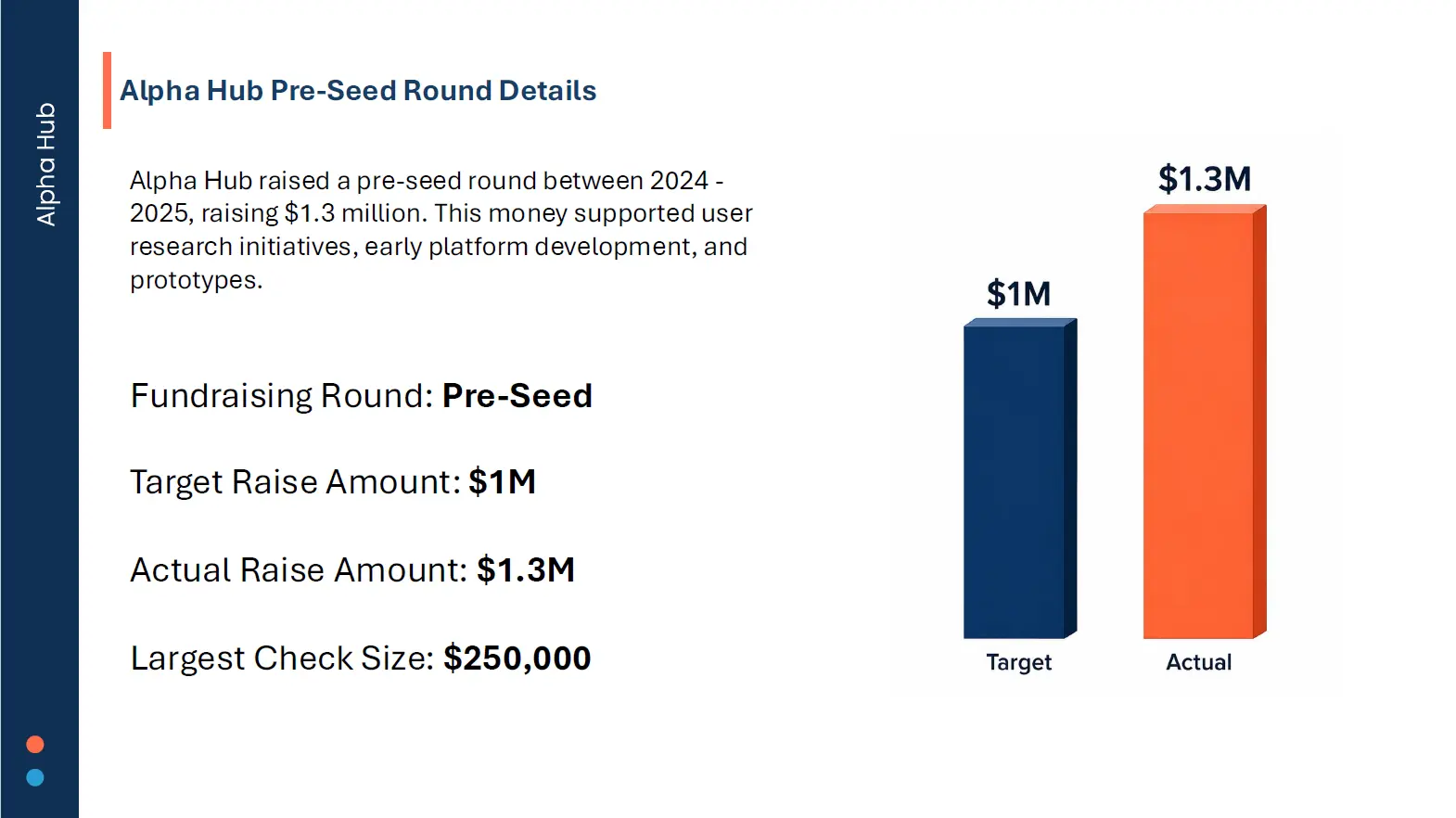
The single most important thing we learned during our own seed raise at Alpha Hub is that the model needs to be internally consistent. If your deck says one revenue figure and your model shows another, that inconsistency gets noticed immediately. Investors are not expecting perfect foresight at seed. They are evaluating whether you understand the unit economics of your business and whether your projections are grounded in reality.
Our financial model was built by our co-founder and CFO, who has extensive financial modeling experience from his time at Ernst and Young. That background made a meaningful difference, not because the model was more elaborate, but because it was structured in a way that institutional investors recognized and trusted. The assumptions were explicit, the logic was traceable, and the scenarios were realistic.
If you do not have that background on your team, keep the model simple and make your assumptions visible. Investors would rather see a clean 12-month model with documented assumptions than a five-year projection that no one believes.
A Clean Cap Table (And What Clean Actually Means)
A clean cap table is one of the most important documents in your seed data room, and one of the most misunderstood.
Clean does not just mean organized. It means no conflicting rights between early investors, convertible instruments with clear and agreed conversion terms, founder vesting that is fully documented, and no outsized early equity grants that would concern an incoming investor. If you have SAFEs or convertible notes outstanding, they need to be listed with their cap, discount, and conversion mechanics clearly laid out. If a co-founder has left the company, their equity situation needs to be resolved and documented before you open the data room to anyone.
Investors look at the cap table early in diligence because it tells them two things: whether the ownership structure makes sense for future rounds, and whether there is any legal messiness that could surface later and complicate a close. A messy cap table does not kill deals immediately, but it raises questions that slow everything down.
For our own seed raise, the cap table was one of the primary documents we shared alongside the pitch deck and financial model in securing our first commitment from a family office. It gave investors a clear picture of who owned what and what the path forward looked like.
A Use of Funds Document: The Gap Most Founders Miss
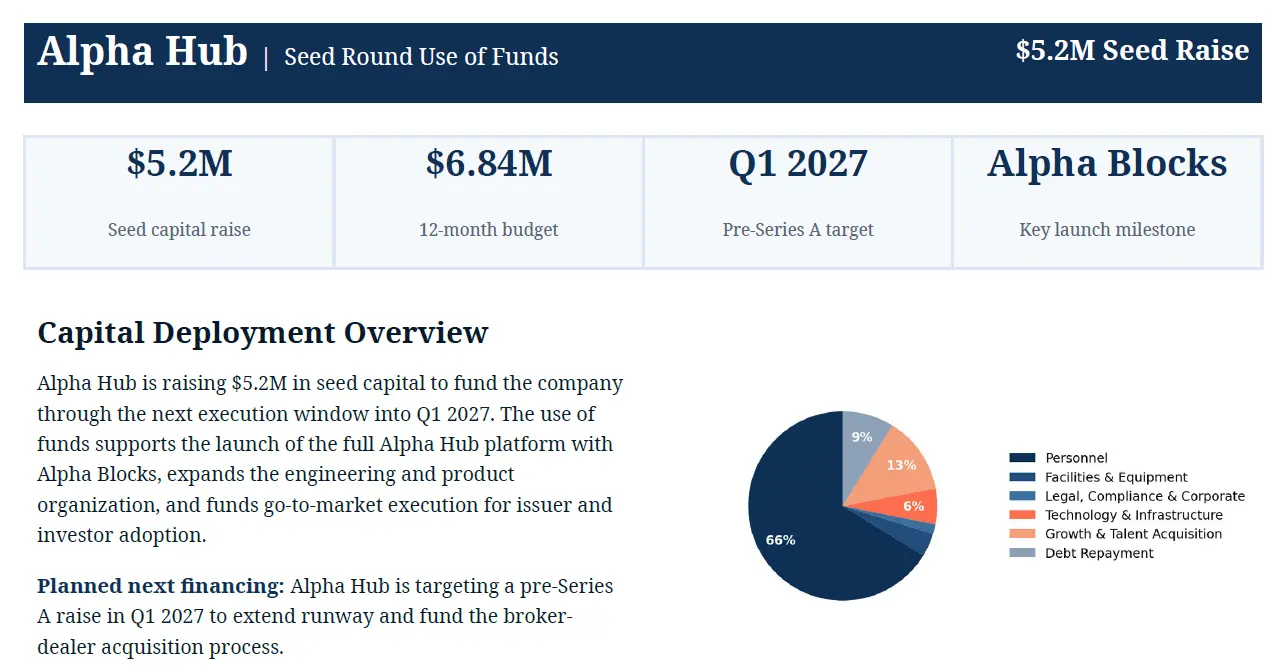
A use of funds document is a clear, milestone-based breakdown of how you plan to deploy the capital you are raising.
This was one of the two things we identified as missing from our own data room partway through our seed raise. We had the financials, we had the model, but we did not have a standalone document that answered the question directly: where is this money going, and what will it accomplish?
Investors ask this in every meeting. If the answer lives only in your pitch deck as a single slide, it gets buried. A dedicated use of funds document gives you a place to lay it out in detail: how much goes to product development, how much to hiring, how much to sales and marketing, and what milestones each allocation is tied to. Milestone-based framing matters here. "We will use $400K to build X feature and onboard our first 50 enterprise customers" is far more convincing than "we will allocate 30% to product."
This document does not need to be long. One to two pages is enough. What it needs is specificity.
Market Research and the Case for Your Opportunity
Seed investors need to believe your market is real before they believe your product can win it. Market research and white papers supporting your thesis belong in the data room, and they carry more weight than most founders give them credit for.
The second thing we fixed during our seed raise was our TAM, SAM, SOM analysis. We had originally used a top-down approach, taking a large industry figure and claiming a percentage of it. Investors pushed back, and for good reason. A top-down TAM tells investors you understand the category. A bottom-up TAM tells them you understand your business.
Bottom-up means you start from your target customer, model out how many of them exist, what you can charge them, and how many you can realistically reach in your go-to-market window. Then you build up to a total addressable market from there. It takes more work, but it is far more credible and far more defensible in the room.
Alongside the TAM analysis, we included market research documents and white papers that provided context on the broader industry and the gap in the market we were built to fill. These were not just supporting documents. They were part of the investment thesis. If your market opportunity is non-obvious, do not assume investors will do the research themselves. Put it in the room.
Legal and Corporate Documents
Your legal documents prove that your company is real, properly structured, and that it owns what it says it owns.
The core set for a seed round includes your certificate of incorporation, any bylaws or operating agreements, a current capitalization summary (tied to your cap table), and IP assignment agreements for every founder, co-founder, and early contractor who contributed to the product.
That last one is the most commonly skipped and the most dangerous to skip. If a contractor wrote code for your product and never signed an IP assignment agreement transferring that work to the company, you may not legally own your core technology. This is a deal-killer that surfaces in legal diligence and can delay or collapse a round entirely.
Worth noting: you do not need to include everything at seed. Board meeting minutes, tax returns, audited financials, and detailed employment agreements are not what seed investors are asking for. As a16z noted in their investor data room guide, investors are not lawyers and accountants; if they have a specific concern, they will request the documents they need. Keep your legal section tight and focused on the documents that establish legitimacy and ownership.
Your MVP and Early Traction Evidence
By the time you are raising a seed round, investors expect to see a working product. Not a prototype, not a mockup. A working MVP with real users.
This distinction matters because the MVP plus early user data together answer the core question seed investors are asking: is the pain point real, and does this product have a credible shot at solving it? Product without users is engineering. Users without product data is hope. Together they start to look like signal.
What to include in this section of your data room:
- A product overview with core features documented
- Screenshots or a demo video walkthrough (or a live demo link if accessible)
- Early user data: how many users, engagement metrics, retention if available
- User feedback, even informal, that supports your value proposition
- A product roadmap with key milestones tied to the capital you are raising
If you have paying customers, lead with that. If you have pilots in progress, document them. If you have letters of intent from prospective customers, include those. At seed, any evidence that real people want what you are building is more valuable than a polished product deck.
One underused asset at this stage is a testimonial from an existing investor or early advisor who has seen the product firsthand. We have seen this carry real weight in diligence conversations. A short video or written statement from someone credible who has evaluated the product and committed adds a layer of social proof that no document can replicate.
What to Leave Out of a Seed Stage Data Room
Knowing what to leave out is as important as knowing what to include. Overloading your data room signals poor prioritization, and seed investors notice.
Leave out the following unless a specific investor asks for them:
- Detailed 3 to 5 year financial projections (investors know these are mostly assumptions at seed; a 12 to 24 month model with documented assumptions is more credible)
- Board meeting minutes (not relevant at seed and often heavily redacted anyway)
- Tax returns and audits (these belong in later-stage diligence, not a seed data room)
- Your full customer list or pricing strategy details (save these for deeper diligence with a specific investor who is moving forward)
- Org charts (investors will look at LinkedIn for team information)
- Documents that are not ready (an incomplete draft signals more risk than no document at all; label anything in progress as in progress and provide a timeline)
A sparse but well-organized data room with the right documents is more credible than a padded one. If you find yourself adding documents to fill space, stop.
How to Organize Your Seed Data Room
A well-organized seed data room uses a simple folder structure that mirrors how investors think, not how your internal file system is organized.
A clean structure for a seed round looks like this:
- Company Overview (pitch deck, executive summary, one-pager)
- Financials (financial model, use of funds, cap table)
- Market (TAM/SAM/SOM analysis, market research, white papers)
- Product (MVP overview, demo, product roadmap)
- Traction (user data, customer references, LOIs, testimonials)
- Legal (certificate of incorporation, IP assignments, material contracts)
Name files clearly with dates and version numbers. A file called "Financial_Model_2026_07.xlsx" is more professional and easier to navigate than "financials_v3_FINAL.xlsx." Small details like this signal operational discipline, which is itself a form of investor confidence.
On access controls: not every investor needs to see everything on day one. A layered approach works well at seed. Share the pitch deck and executive summary first. Once an investor signals serious interest, open the full data room. Gate access with NDA requirements before sharing sensitive documents like your full financials or detailed customer data.
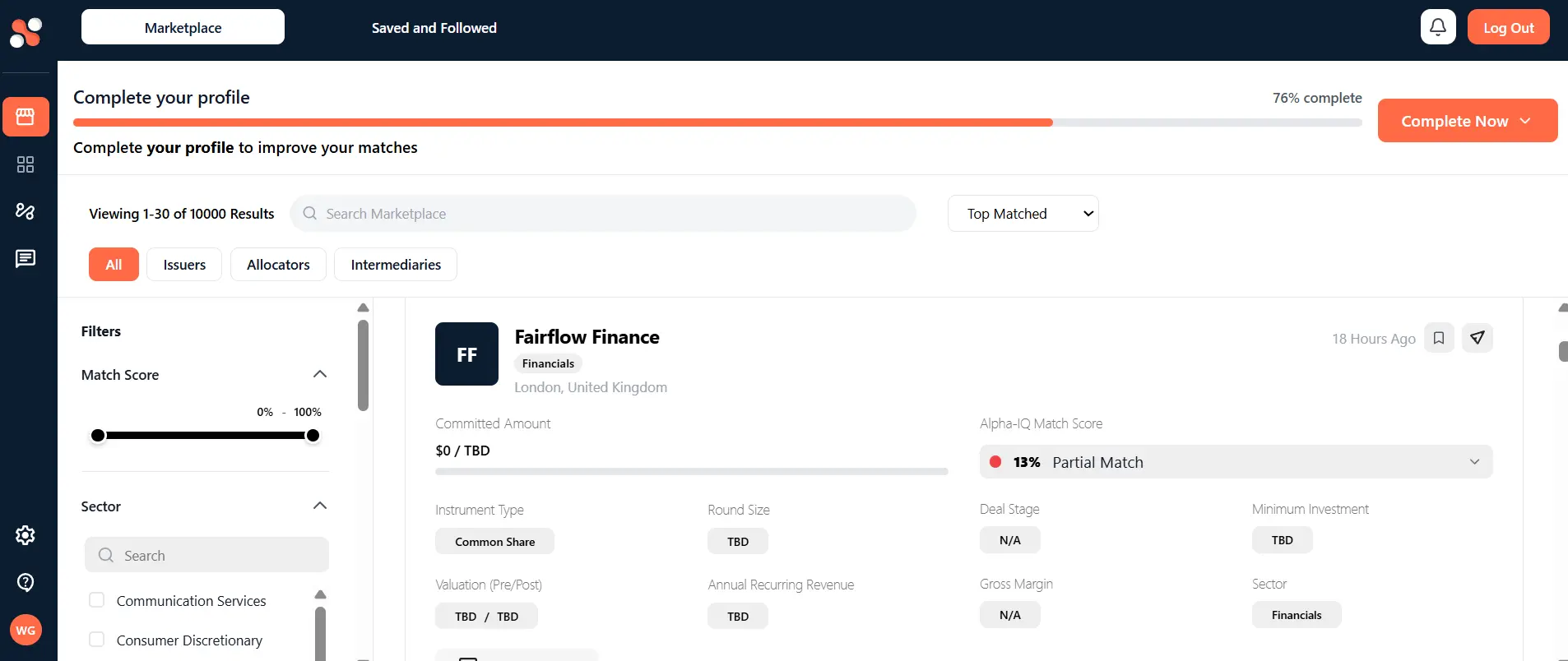
Alpha Hub's data room is built for exactly this workflow: secure document organization, granular access controls, and NDA gating so you control who sees what and when. You can learn more at Alpha Hub's data room page.
What Seed Investors Are Actually Evaluating
Seed investors are evaluating founders and momentum. That is the lens everything else passes through.
As CRV, an early-stage venture firm that invests at both seed and Series A, put it directly: seed decisions are weighted toward founder conviction, while Series A decisions are weighted toward demonstrated metrics. That distinction should shape every document you put in the room.
At pre-seed, investors are betting on an idea and a team. By seed, they want to see that you have moved from idea to early validation. That means a working MVP, real users, and early evidence that the pain point is real and your product addresses it. They are not expecting repeatable revenue or a proven sales motion. That is Series A. What they need to see at seed is that you understand your market, you can build a product, you have gotten it in front of real users, and you know what to do with the capital they give you.
The median time between seed and Series A has stretched to 616 days, according to Carta data. Investors know that. They are underwriting a long runway, and they want to see a founder who can operate and make decisions over that period without needing constant guidance. A well-built data room communicates that.
Frequently Asked Questions
A seed stage data room is a secure, organized collection of documents that a founder shares with investors during a seed round fundraise. It typically includes a pitch deck, financial model, cap table, use of funds document, market research, legal documents, and early traction evidence. Its purpose is to give investors what they need to conduct due diligence and build conviction to write a check.
A seed data room should have between 8 and 15 documents, depending on how much traction and legal documentation you have at this stage. More is not better. A focused data room with the right documents is more effective than a large one padded with materials investors did not ask for and will not read.
The difference between a seed data room and a Series A data room is depth and evidence. A seed data room focuses on founder conviction, market opportunity, a working MVP, and early traction. A Series A data room adds cohort analysis, detailed unit economics, customer references, a full three-year financial model, and evidence of a repeatable growth engine. The bar for documentation rises significantly because the check sizes rise significantly.
Seed investors most commonly ask for the pitch deck, cap table, financial model, and early traction data, in roughly that order. The pitch deck opens the conversation. The cap table tells them whether the ownership structure is clean. The financial model tells them whether you understand your business. The traction data tells them whether the market is responding. A use of funds document is the most commonly missing item and one of the first things investors ask about if it is not already in the room.
You need a data room for a seed round if you are running a real process with multiple investors simultaneously. It does not need to be elaborate. But having your key documents organized in a secure, access-controlled environment signals professionalism, speeds up diligence, and means you are never scrambling to send individual files when an investor asks. The moment a serious investor signals interest is not the moment to start building your data room. Build it first.
For a full breakdown of what documents investors expect at every stage of fundraising, see our data room checklist for investors, which covers pre-seed through growth rounds with document-by-document guidance.