

Data room structure is the folder hierarchy you use to organize the documents you share with investors, typically broken into top level categories like corporate, financials, legal, and product, with subfolders nested underneath for the specific documents each category needs. Where you put each of those categories matters as much as what is in them. For example, DocSend found that for pre-seed companies, investors spend 15% of their time on the team bios slide of the pitch deck. That's more than any other slide, which indicates that pre-seed companies should clearly display their team bios near the top of the data room, not bury it behind legal and contracts.
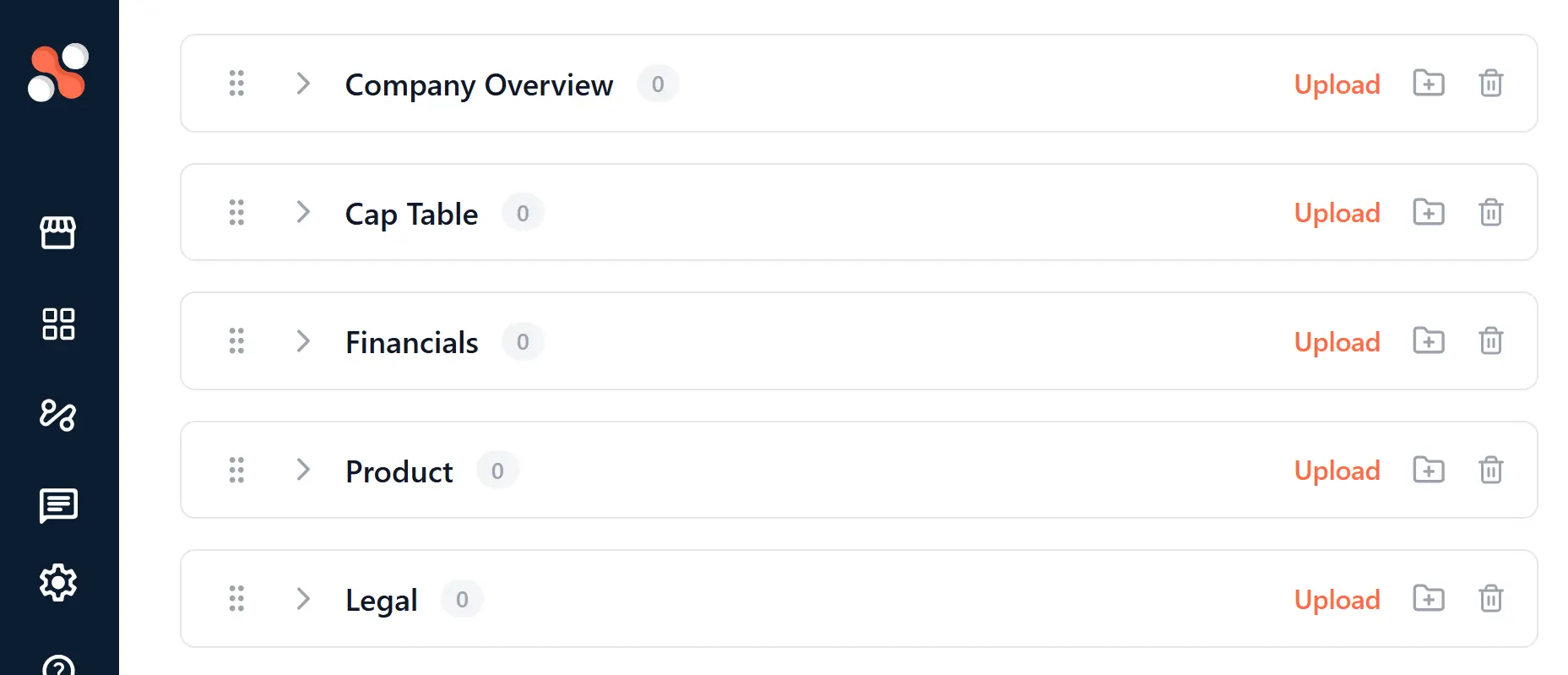
Most guides on data room structure stop at listing categories, as if you pick a structure once at the start of your raise and it holds for the whole process. That is not how it actually works. In our competitive research at Alpha Hub, we found that a lot of data room platforms are genuinely restrictive once a room is already built. You can create folders on day one, but moving them, renaming them, or getting rid of ones you no longer need is either not possible or buried behind a support ticket. That is why we made sure to ship drag and drop reordering, custom folder and subfolder naming, and the ability to delete folders into the MVP of our own product. We wanted founders to have full autonomy over their room's structure from the moment they open it, not just at setup.
Here is how to structure a data room for a capital raise, how that structure should change depending on your stage, and why the ability to keep changing it matters more than getting it perfect on day one.
What Should a Data Room Structure Include?
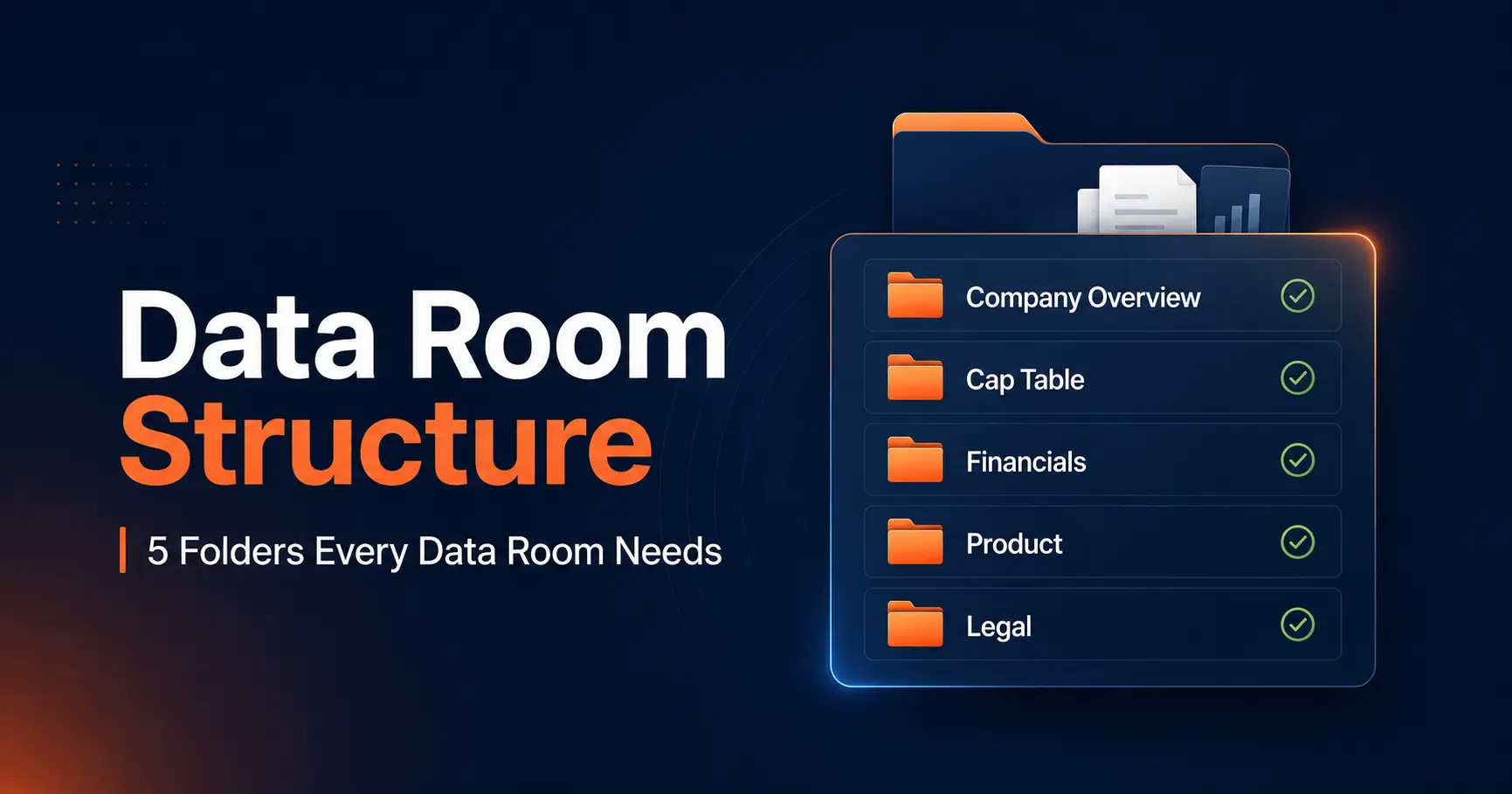
A data room structure for a capital raise should include five core categories: Company Overview, Cap Table, Financials, Product and Technology, and Legal, with subfolders under each one for the specific documents investors will ask to see.
Company Overview: Pitch deck, company one-pager, founder and team bios, and customer testimonials or case studies if you have them. This is the first folder an investor should open, and it should be treated that way. It is where an investor decides whether to keep looking, so team information and social proof belong here alongside the deck, not filed away somewhere further down.
Cap Table: Fully diluted capitalization table, option pool documentation, and SAFE or convertible note agreements from prior rounds. Keep this separate from Company Overview since it gets referenced constantly during the round, by you, by lawyers, and by every new investor doing quick diligence.
Financials: Historical financial statements, your financial model, burn rate, use of funds for the round you are raising, and traction metrics such as revenue, retention, and pipeline. If you have audited financials, they go here too.
Product: Roadmap, architecture overview, and security posture. Include this even at pre-seed. Investors increasingly want to see how the product is built, not just what it does.
Legal: Certificate of incorporation, material contracts, IP assignments from founders and early contractors, and any outstanding litigation. This is the folder investors' lawyers will spend the most time in, even though it is rarely the first one they open.
Fundraising rooms rarely need more than these five top level categories. M&A rooms often expand into eight or more, adding HR, tax, and regulatory folders because a buyer is underwriting the entire business, not just the next 18 months of growth.
How Should You Order Your Data Room Folders?
You should order data room folders by what an investor needs to trust the pitch before they need to verify it, which means Company Overview goes first, Cap Table and Financials come next, and Legal goes last.
Investors form an impression of a data room fast. If the first folder they open is a wall of unsorted contracts instead of a clean overview with the deck and the team right there, that colors how they read everything that follows. This lines up with how investors actually behave in a pitch deck, where the team slide gets more attention than almost anything else in the deck. Put your pitch deck, one-pager, and team bios at the top of the structure in Company Overview. Save the granular legal documentation, itemized contracts, and IP assignment paperwork for folders further down. The investor will get there. They just should not have to start there.
How Should Data Room Structure Change by Fundraising Stage?
Data room structure should get more granular as you move from pre-seed to Series A and beyond, starting with a light five folder structure early and expanding into stage specific subfolders as the company and the round get more complex.
Pre-seed and seed. Keep it simple. Five folders, minimal subfolders, and a strong emphasis on the pitch deck and financial model over legal depth. According to NYU Entrepreneurship, founders typically have more than 200 investor conversations before closing a seed round, so the room needs to hold up to repeated, quick visits from investors who are comparing you against a dozen other companies in the same week.
Series A. Add subfolders for prior term sheets, side letters, and 409A valuation history under Cap Table, plus board meeting minutes under Legal. Investors at this stage are also underwriting your metrics more closely, so the traction section of your Financials folder should expand into subfolders by metric type: revenue, retention, pipeline.
Growth stage. This is where audited financials, formal compliance documentation, and a more complete legal folder start to matter. The structure starts to look closer to what an M&A room would expect, even though the intent behind the raise is still growth capital, not an acquisition.
The median time from seed to Series A is now 774 days, according to Carta's Q4 2024 State of Private Markets report. That is roughly two years during which your data room structure needs to keep pace with a company that looks nothing like it did at the last raise.
Why Does a Data Room Structure Need to Stay Flexible?
A data room structure needs to stay flexible because a raise that stretches across months, sometimes years, will outgrow whatever folder order you picked on day one, and a room that cannot be reorganized forces you to either live with clutter or rebuild it from scratch.
This is the part most data room guides skip. They treat structure as a one time setup task: pick your categories, name your folders, done. In practice, rounds evolve. You add a new investor update folder halfway through. You realize the legal folder needs subfolders you did not anticipate. You bring on a new hire whose bio needs to go somewhere. If your platform does not let you reorder, rename, or delete folders without friction, every one of those changes becomes a small tax on your time during the part of the process when you have the least of it to spare.
This is exactly the gap we found in our own competitive research. A lot of data room platforms let you build a structure once, but changing it later means contacting support, rebuilding folders manually, or living with a structure that no longer matches how your round actually works. We built Alpha Hub's data room so that reordering folders is drag and drop, renaming is inline, and deleting or adding subfolders takes seconds, all in the base product, not a paid upgrade.
How Does Alpha Hub Compare to Other Data Rooms on Structure?
Alpha Hub: Built for a Structure That Changes
Alpha Hub gives you full control over your room's structure from day one. Folders can be reordered with drag and drop, renamed inline, and deleted at any point, and you can nest subfolders as deep as your round requires. This sits alongside Alpha Hub's deal flow and CRM tools and its investor marketplace, so the same room you structure for outreach is the room you use to manage the relationships that come out of it.
Papermark: Numbered Index, Basic Reordering
Papermark supports drag and drop folder organization and ships with numbered top level folders out of the box, which works well if you are comfortable with the standard M&A style index convention. It is a solid option for founders who want that structure specifically, though it is built around that fixed numbering convention rather than a structure that reshapes itself around a fundraising process.
Orangedox: Structure Lives in Google Drive
Orangedox layers data room features like access tracking and NDA gating on top of Google Drive. That means your actual folder structure is managed at the Drive level, not inside a purpose built data room interface. It is a reasonable choice if your team already lives in Drive, but restructuring the room means restructuring your Drive folders, which is a different workflow than reorganizing inside a dedicated platform.
Carta: A Cap Table Tool With a Data Room Attached
Carta's core product is equity and cap table management, and the data room sits alongside it as a supporting feature. That makes it a strong choice if cap table accuracy is your top priority, but founders using it as a primary data room should confirm current folder management capabilities directly on Carta's site before assuming feature parity with a dedicated data room platform.
Frequently Asked Questions
The standard data room folder structure for a capital raise includes five top level folders: Company Overview, Cap Table, Financials, Product and Technology, and Legal, with subfolders under each for specific documents. M&A data rooms typically use a longer, numbered structure with additional categories like HR, tax, and regulatory that fundraising rooms do not usually need.
Yes, you can change a data room's structure after investors have access, though how easily depends entirely on your platform. Some data rooms make reordering, renaming, or deleting folders straightforward even with the room already shared. Others require rebuilding sections manually or contacting support, which is worth checking before you choose a platform, not after your round is already underway.
A data room should have around five top level folders for most fundraising rounds, expanding into more subfolders as the company and the round mature. Pre-seed and seed rooms can stay lean. Series A and growth stage rooms typically need more granular subfolders within the same top level categories rather than more top level folders overall.
Yes, a data room structure should be different for fundraising versus M&A. Fundraising rooms are built around convincing an investor to back the next stage of growth, so they lead with the company overview, financial model, and traction. M&A rooms are built around a buyer underwriting the entire business, so they expand into eight or more categories covering areas like HR, tax, and regulatory history that a fundraising round rarely touches.